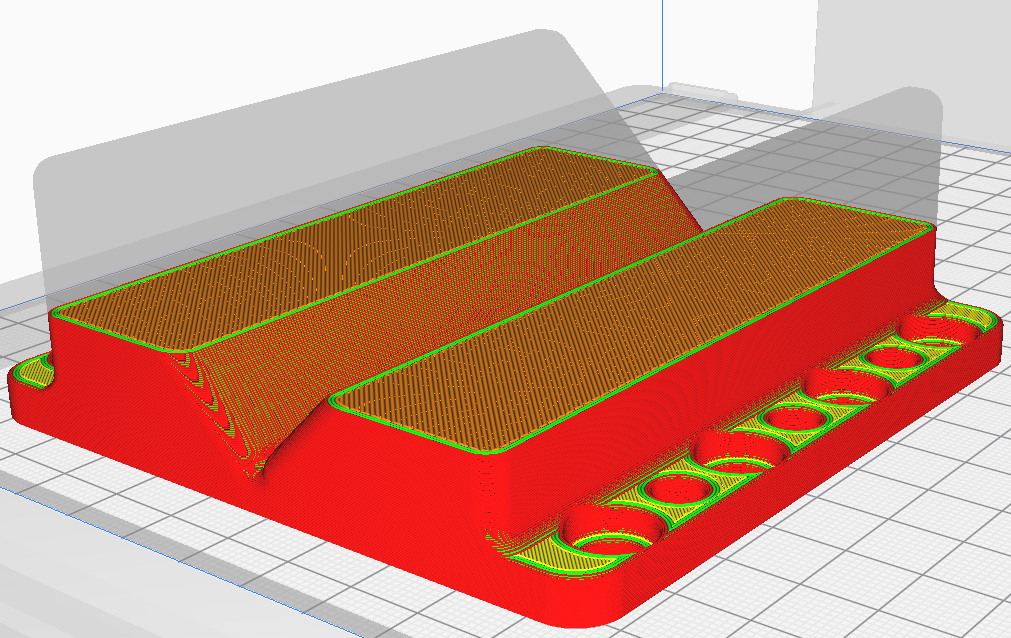
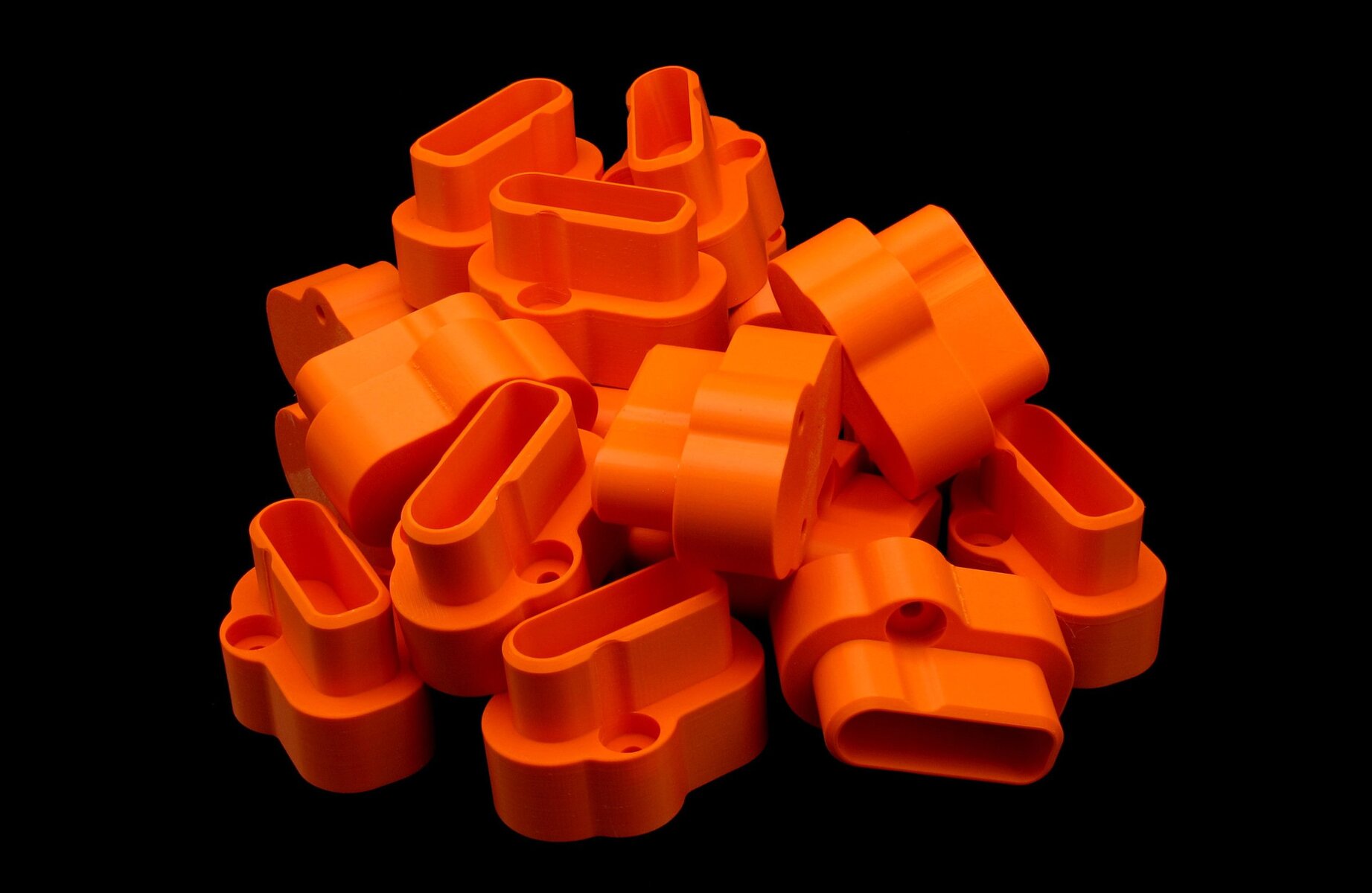
Fused deposition modeling (FDM) is the most versatile technique and is used for functional and visual prototypes, final products, jigs and fixtures, package studies, visualization and architectural models with a lower degree of detail richness and surface finish. FDM has the largest range of materials of all 3d printing techniques and is the one used by the most users. By extruding thermoplastic through a nozzle, the object is built up layer by layer. The selectable materials range from everything between the most common construction plastics to more specific plastics such as bio-plastics and plastics based on corn and wood. Many different colors are offered but normally you are limited to only one or two colors per component. We work with many different methods within 3D printing, including SLS printing and SLA printing.
Are you unsure which process suits your purpose best? Then click here!
Characteristics
Colours
Characteristics
Colours
Characteristics
Colours
Characteristics
Colours
Characteristics
Colours
Characteristics
Colours
PETG is a versatile material with material properties that lie between PLA and ABS, which means that it is both stiff and impact-resistant. These mechanical properties together with the high resistance to chemicals and moisture make PETG a perfect material for applications inside and outside industrial doors. We offer PETG in a variety of colors and we also have an ESD-rated variant, PETG-ESD, as well as one that is carbon fiber reinforced, X-PETG.
| Material data | Unit | Value |
|---|---|---|
| Tensile strength | MPa | 39 |
| E-module | MPa | 1895 |
| Flexural strength | MPa | 72 |
| Flexural modulus | MPa | 2050 |
| Elongation at break | % | 7,9 |
| Density | g/dm³ | 1260 |
| Heat resistance temperature (0.45 MPa) | °C | 67 |
| Material data | Unit | Value |
|---|---|---|
| Tensile strength | MPa | 39 |
| E-module | MPa | 1895 |
| Flexural strength | MPa | 72 |
| Flexural modulus | MPa | 2050 |
| Elongation at break | % | 7,9 |
| Density | g/dm³ | 1260 |
| Heat resistance temperature (0.45 MPa) | °C | 67 |
PETG ESD is an electrically semi-conductive material based on the impact-resistant and durable polymer PETG. With the same mechanical properties as PETG, PETG ESD has a wide range of applications and is very useful where there are requirements for ESD-classified materials such as electronically sensitive equipment.
Protects against electrical discharges
High strength and resistant to many chemicals
Used for fixtures, jigs, housings for electrical components, connectors, etc.
| Material data | Unit | Value |
|---|---|---|
| Tensile strength | MPa | 39 |
| E-module | MPa | 1895 |
| Flexural strength | MPa | 72 |
| Flexural modulus | MPa | 2050 |
| Elongation at break | % | 7,9 |
| Density | g/dm³ | 1260 |
| Heat resistance temperature (0.45 MPa) | °C | 67 |
| Material data | Unit | Value |
|---|---|---|
| Tensile strength | MPa | 39 |
| E-module | MPa | 1895 |
| Flexural strength | MPa | 72 |
| Flexural modulus | MPa | 2050 |
| Elongation at break | % | 7,9 |
| Density | g/dm³ | 1260 |
| Heat resistance temperature (0.45 MPa) | °C | 67 |
NinjaFlex® is a thermoplastic polyurethane (TPU) and is as similar as you can get to regular rubber in 3d printing. With an elasticity of 65%, it is used for soft parts of grippers, flexible covers for mechanical joints, and for all types of prototypes where rubber-like properties are desired. NinjaFlex® has very good adhesion between layers which makes it a strong material in all directions. The surface structure is rough and the richness of detail is low.
| Material data | Unit | Value |
|---|---|---|
| Tensile strength | MPa | 26 |
| E-module | MPa | 12 |
| Izod impact strength (23°C) | kJ/m² | 4.2 |
| Elongation at break | % | 660 |
| Elongation during plasticization | % | 65 |
| Shore A Hardness | – | 85 |
| Density | g/dm³ | 1190 |
| Heat resistance temperature (0.45 MPa) | °C | 44 |
| Material data | Unit | Value |
|---|---|---|
| Tensile strength | MPa | 26 |
| E-module | MPa | 12 |
| Izod impact strength (23°C) | kJ/m² | 4.2 |
| Elongation at break | % | 660 |
| Elongation during plasticization | % | 65 |
| Shore A Hardness | – | 85 |
| Density | g/dm³ | 1190 |
| Heat resistance temperature (0.45 MPa) | °C | 44 |
CFRP 20 is a carbon fiber reinforced composite and contains 20 % chopped fibers and a matrix of copolyester. This combination of materials results in a composite with very high flexural strength, which makes it ideal for functional products where high strength is required. Typical areas of use are parts for sports equipment, drones and RC models.
| Material data | Unit | Value |
|---|---|---|
| Tensile strength | MPa | 95 ± 5 |
| E-module | MPa | 5900 ± 100 |
| Flexural strength | MPa | 130 ± 5 |
| Flexural modulus | MPa | 6200 |
| Elongation at break | % | 9 ± 1 |
| Material data | Unit | Value |
|---|---|---|
| Tensile strength | MPa | 95 ± 5 |
| E-module | MPa | 5900 ± 100 |
| Flexural strength | MPa | 130 ± 5 |
| Flexural modulus | MPa | 6200 |
| Elongation at break | % | 9 ± 1 |
Architect is a beautiful bio-based material with a matte paper-like surface and is specially developed for architectural models. The print layers are barely visible thanks to the biofibres in the material. Architect can be sanded and painted with ease and is available in three colors: black, warm white and cool white.